Intelligence at source
Process physical signals beside the sensor, where context is fresh and response time matters.


Olive co-designs electronics, embedded compute, real-time software, physical AI, precise timing and ROS 2 autonomy as one deployable technology stack—from a sensing element to a complete AMR.
Robotic performance is limited by the weakest boundary between power, signal integrity, compute, timing, software and motion.
Olive designs across those boundaries. Power rails, sensor buses, DMA buffers, kernel scheduling, inference, DDS communication and autonomy are treated as one measurable path. The same engineering logic scales from an embedded sensor node to a complete mobile robot.
Process physical signals beside the sensor, where context is fresh and response time matters.
Preserve timing from hardware acquisition through fusion and DDS publication.
Expose devices directly as ROS 2 nodes over standards-based DDS—not through proprietary wrappers.
Carry one hardware and software architecture from prototype sensors to production robot fleets.
Select a layer to trace the system from board-level electronics and embedded execution to physical AI, ROS 2 communication and autonomous behavior.
Power integrity, clock quality, signal routing, EMC behavior and interface protection define what the software can trust. Olive treats the PCB and embedded runtime as one timing-aware system.
Olive SiP and SoM platforms integrate compute, memory, power management, flexible I/O and AI acceleration in a 38 × 38 mm footprint—forming a reusable hardware core for intelligent robotic devices.
olixOS™ is Olive’s embedded real-time Linux foundation, bringing hardware abstraction, timing services, optimized scheduling and the ROS 2/DDS runtime into a controlled device environment.
olixAI™ runs inference on continuous sensor data at the edge—from adaptive filtering and calibration to sensor fusion, anomaly detection and confidence-aware state estimation.
Each Olive device publishes directly through a DDS-backed ROS 2 interface with topics, timestamps, services and configurable QoS. No host-side wrapper is required to make the device robot-ready.
At robot level, synchronized sensing feeds localization and SLAM, costmaps and planning, holonomic or differential-drive control, safety supervision and fleet operations through one ROS 2 graph.
Reliable robotics starts before the kernel boots. Olive develops the power tree, clocks, sensor buses, high-speed interfaces, memory, compute and board support package as one measurable embedded platform.
Sequencing, transient response, decoupling and power-domain supervision protect sensor accuracy and compute stability across boot, load steps and network activity.
Controlled impedance, return paths, length constraints and connector strategy preserve high-speed links and low-level sensor signals.
SPI, I²C, UART, CAN, RS-485, USB and Gigabit Ethernet connect sensors, actuators, service tools and robot networks.
Device tree, pin control, clocks, DMA, IRQ routing and kernel drivers make the electrical design deterministic and inspectable.
Power filtering, ESD protection, grounding, shielding and thermal paths are considered with PCB geometry and sustained workloads.
Test points, programmed identity, boundary checks, calibration records and traceable diagnostics support manufacturing and service.
Watchdogs, hardware enables, power-state monitoring and isolated control paths keep supervisory functions explicit.
Every stage preserves the information robotics depends on: precise time, physical context, model confidence and deterministic delivery.
Capture high-rate physical measurements through optimized sensor interfaces and buffered I/O.
Attach acquisition-time context and align channels against a shared device or network clock.
Calibrate, compensate, filter, resample and validate the incoming signal close to the source.
Run embedded fusion, time-series inference, anomaly detection and confidence estimation.
Deliver raw and intelligent outputs as native ROS 2 messages with purpose-defined DDS QoS.
A reusable SiP/SoM architecture that places capable compute directly inside the sensing product.
Sending every raw sample to a central computer adds bandwidth, latency and integration work. Olive moves the first intelligence layer to the sensor edge, so the robot receives synchronized, calibrated and context-aware data.
Run quantized signal-processing and inference workloads with up to 6 TOPS of on-device compute.
Bridge sensors, timing sources and robot networks through one consistent embedded architecture.
Keep access to source measurements while adding fused state, events and model confidence.
Apply the same compute core, operating system and ROS-native interface across multiple products.
Fusion is only as trustworthy as its timestamps. Olive carries time through the complete path—from acquisition and buffering to inference and DDS publication—while supporting network synchronization through hardware-assisted IEEE 1588 PTP and TSN-ready communication.
olixOS™ turns compact embedded hardware into a deterministic, maintainable and robot-native device platform.
olive@edge:~$ olix-status --realtime
[kernel] PREEMPT_RT active
[timing] ptp clock locked
[hal] sensor pipeline zero-copy
[dds] native endpoint ready
olive@edge:~$ _
Preemptible execution, CPU affinity and interrupt control for predictable sensor workloads.
Optimized device access and DMA-oriented data paths reduce unnecessary copies and context switches.
DDS QoS, PTP timing and TSN-ready networking keep critical streams prioritized.
A unified runtime for configuration, diagnostics, updates and product-level reliability.
With Olive, ROS 2 is not a host-side adapter added after the device is built. The device itself participates in the robot graph, publishes through DDS and exposes a consistent interface from development to deployment.
$ ros2 topic echo /olive/sensor/data --once
stamp: 178453.420921 frame_id: olive_link
status: synchronized confidence: 0.998
Robotic sensing is not one generic workload. Olive structures acquisition, conditioning, inference, publication and device management as distinct execution domains, so time-critical work stays protected from background activity.
Use interrupt control, CPU affinity and DMA-oriented I/O to keep high-rate sampling independent from noncritical services.
Treat filtering, fusion, inference and publication as measurable stages in one end-to-end timing path.
Make timing state, synchronization, data quality and runtime status visible to the robot—not hidden inside a driver.
Robotic software needs source time, coordinate context, calibration state, uncertainty and device health alongside the measurement. Olive carries that meaning from acquisition to the ROS graph.
header.stamp178453.420921
sequence00018432
frame_idolive_sensor_link
signal[][ +0.021, −0.994, +0.113, … ]
covariance[][ 2.1e−5, 0, 0, … ]
time_statePTP_LOCKED / SOURCE_TIME
modelolixAI / confidence: 0.998
device_healthNOMINAL
High-rate state, fault events and device configuration have different delivery needs. Olive can apply purpose-defined DDS behavior instead of forcing every signal through one generic channel.
Engineering teams can reason about the complete path through explicit status and diagnostics.
Olive changes the sensor’s role—from a passive data source that needs a host-side software stack into an intelligent network node.
The same architecture expands into olixRobot™ ANT1: synchronized perception, state estimation, SLAM, Nav2 planning, motion control, safety I/O and fleet operations in one ROS 2-native system.
LiDAR, cameras, IMU and wheel encoders enter the graph with source time and coordinate context. The perception layer validates data quality before it reaches localization or safety logic.
Explore how the platform appears as inertial intelligence, synchronized industrial sensing, robot connectivity and a complete autonomous mobile robot.
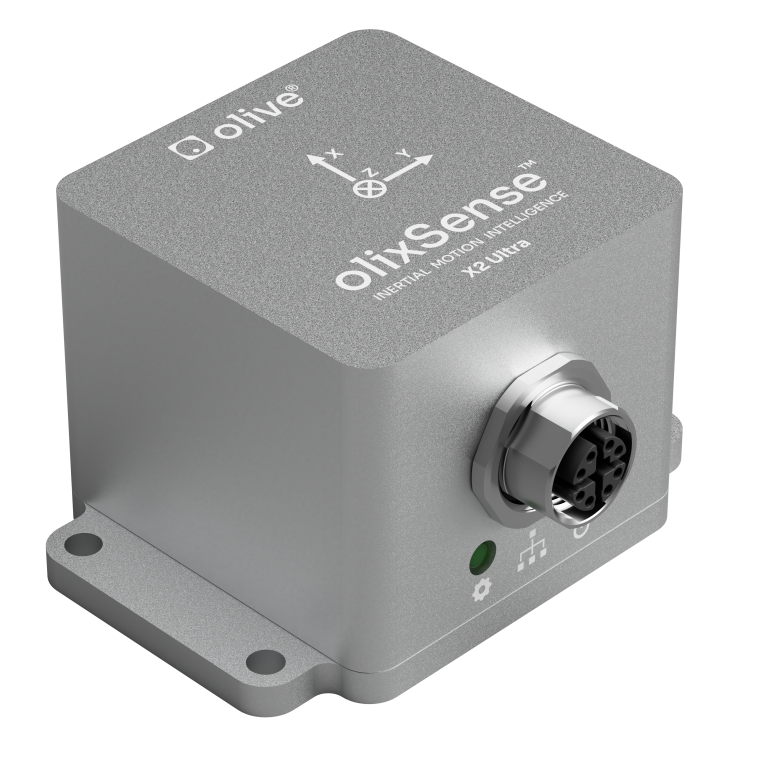
PoE Ethernet, IEEE 1588 PTP, redundant Multi-MEMS sensing and embedded Physical-AI fusion for time-critical robotics.
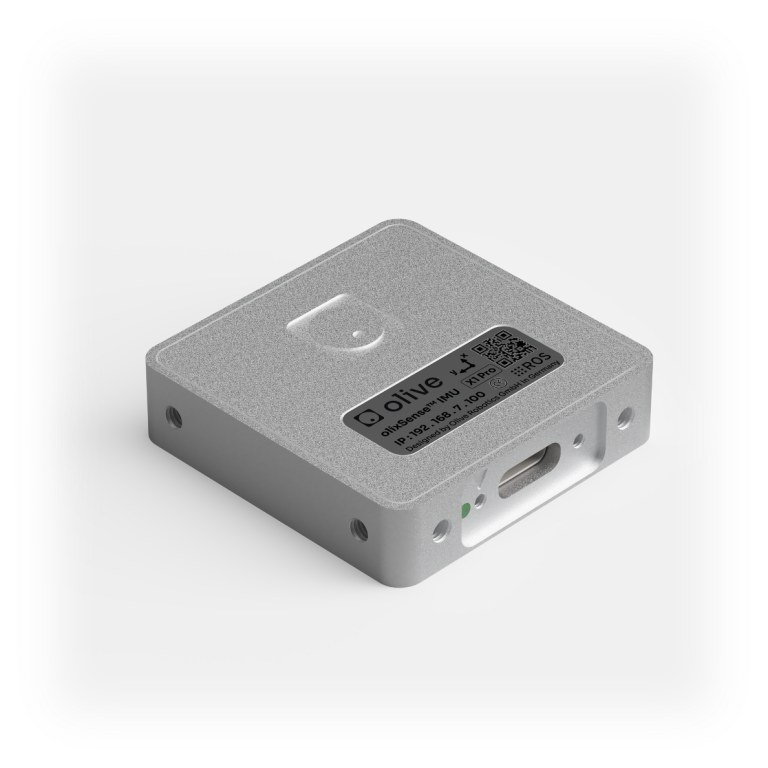
Compact redundant motion sensing with embedded fusion, native ROS 2 and Ethernet-over-USB through one Type-C connection.
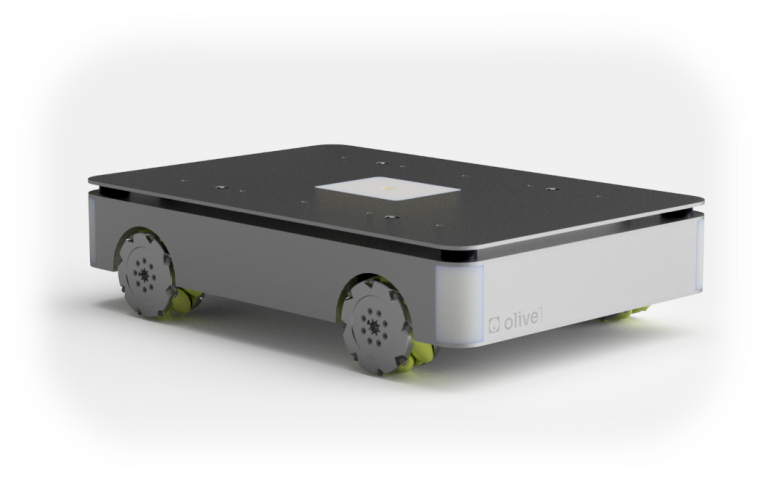
Holonomic mobility, multimodal perception, ROS 2/DDS, Nav2 and edge AI in a modular autonomous robot platform.
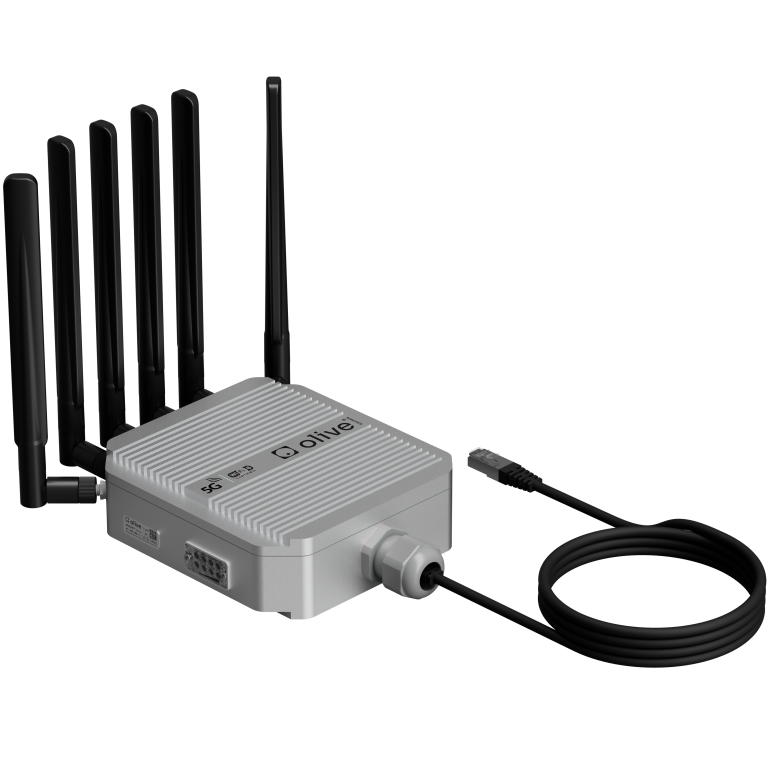
Industrial 5G, Wi-Fi 6, dual-SIM resilience, PoE+ Ethernet and ROS 2 diagnostics for connected robots and fleets.
Deploy an intelligent ROS-native Olive device as a finished component in your robotic system.
Bring Olive’s compact compute and software platform inside your own sensor, actuator or robot module.
Build on the full Olive stack—from embedded electronics and sensors to olixOS™, olixAI™, ROS 2 autonomy and fleet operations.
Whether you need a board-level embedded platform, an intelligent sensor or a complete autonomous mobile robot stack, Olive can help build the electronics, runtime and robotics system as one architecture.
Discuss your architecture